Smartphone Apps Drive Shifts in Poker Tournament Structures Across State Boundaries
Felix Flores · Jul 7, 2026
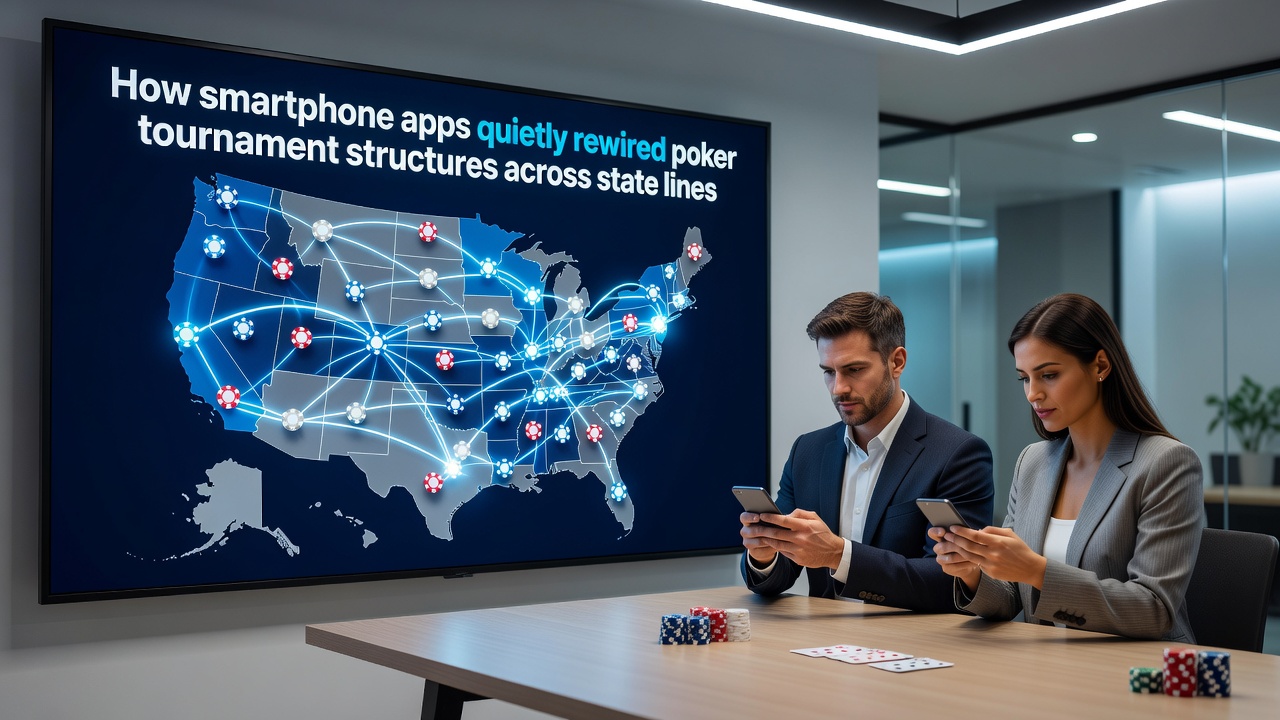
Smartphone Apps Drive Shifts in Poker Tournament Structures Across State Boundaries
Smartphone applications have altered how poker tournaments operate by linking players from separate states into unified events, and this integration has prompted organizers to revise buy-in levels, blind schedules, and payout distributions to match the expanded fields that result. Data from multiple jurisdictions shows that apps now handle remote qualifiers and direct entries, which creates player pools that cross regulatory lines while each state maintains its own licensing rules for the platforms involved.
States such as New Jersey, Pennsylvania, and Michigan operate under separate statutes yet permit certain interstate compacts that apps exploit for shared tournaments, and this setup has led operators to standardize some structural elements like starting chip counts while still varying final table formats based on local tax requirements. Figures from the Pennsylvania Gaming Control Board indicate that online poker revenue reached record levels in 2025, with a portion of that growth tied directly to app-driven events drawing participants from neighboring states.
App Features That Reshape Event Design
Registration flows within these applications allow users to select tournaments that originate in one state but accept entries from approved jurisdictions, and the resulting increase in participant numbers has forced adjustments in structure sheets that once catered to smaller, venue-based crowds. Tournament directors now incorporate satellite phases hosted entirely through apps, which feed into main events with modified rebuy periods and extended late-registration windows to handle the influx without overwhelming physical sites.
Observers note that blind structures have lengthened in many multi-state series because app connectivity sustains higher average stacks deeper into events, and this change stems from data analytics that track player behavior across devices rather than from traditional floor decisions alone. One study from the University of Nevada's gaming research division found that average tournament duration increased by 18 percent in compact-participating states between 2023 and 2025, attributing the shift to the volume of remote entries processed through mobile platforms.
Cross-Border Participation Patterns
Players in states without full online poker legalization often access multi-state events through apps licensed elsewhere, provided geofencing and identity verification meet each participating regulator's standards, and this arrangement has quietly expanded the reach of marquee tournaments without requiring physical travel. Data compiled by the Canadian Gaming Association reveals similar patterns in provinces that permit app-based qualifiers feeding into U.S. events under reciprocal agreements, creating prize pools that reflect combined player bases from different countries as well as states.

July 2026 marks the scheduled expansion of one such compact among additional East Coast states, which will further standardize certain payout percentages while leaving others to vary by local revenue-sharing formulas. Industry reports indicate that apps already preview these changes through updated tournament lobbies, giving participants advance notice of structural tweaks that accommodate the projected rise in entries.
Regulatory Compliance and Structural Adjustments
Each state gaming authority reviews app algorithms that determine seat assignments and table balancing for events spanning jurisdictions, adn these reviews have produced requirements for transparent randomization methods that affect how fields break down during early stages. Operators respond by publishing structure sheets that list both base rules and any compact-specific modifications, allowing players to compare formats across different app interfaces before committing funds.
Evidence from enforcement actions shows that fines have been issued when apps failed to segregate funds properly between state-specific and multi-state pools, which in turn prompted refinements in how prize guarantees are calculated and advertised. Those refinements include tiered payout structures that scale automatically based on the proportion of entries originating from each jurisdiction, a feature now common in major app ecosystems.
Future Developments in App-Mediated Events
Continued integration of real-time analytics within smartphone platforms enables organizers to monitor drop-off rates and adjust final table formats mid-series, and this capability has become standard in events that cross state lines. Regulatory bodies in multiple regions now require disclosure of these algorithmic adjustments so that participants understand how their buy-ins translate into varying payout ladders depending on the overall field composition.
Academic papers examining five years of compact data conclude that these app-driven changes have increased total prize pools by an average of 27 percent in participating states without corresponding rises in individual buy-ins, largely because the technology aggregates entries more efficiently than previous manual systems.
Conclusion
Smartphone applications continue to influence poker tournament architecture by enabling cross-state participation that demands flexible structures, and regulators along with operators respond with incremental rule updates that maintain compliance while supporting larger events. The patterns established through 2025 and into July 2026 demonstrate that app connectivity remains a central factor in how multi-jurisdictional tournaments evolve their formats and prize distributions.