Seasonal Tourism Patterns Reshape Promotional Approaches and Game Options in Resort Poker Environments
Felix Flores · Jul 28, 2026

Seasonal Tourism Patterns Reshape Promotional Approaches and Game Options in Resort Poker Environments
Resort destinations experience distinct visitor influxes tied to weather patterns, holidays, and regional events, and these cycles directly influence how poker rooms structure their offerings. Data from multiple jurisdictions shows that peak periods often coincide with expanded tournament schedules while slower months feature scaled-back promotions aimed at local players. Observers note that operators adjust rake structures, buy-in levels, and game rotations to match expected foot traffic rather than maintaining static lineups year-round.
July 2026 stands out as a high-traffic window for many North American and Asian resort markets because school holidays and corporate conventions overlap. Poker rooms in these locations have historically increased the frequency of daily no-limit hold'em events and introduced short-duration sit-and-go formats to capture transient visitors who prefer quicker sessions. Figures from the Nevada Gaming Control Board reveal measurable upticks in poker revenue during these months compared with shoulder periods, prompting managers to allocate additional floor space to popular variants while reducing less demanded games such as pot-limit Omaha.
Promotional Adjustments Tied to Visitor Flows
Marketing teams coordinate with hotel and tourism partners to bundle poker incentives with room packages and entertainment tickets. These collaborations produce time-limited offers that appear only during high-arrival windows, such as free tournament entries for guests staying three or more nights. Researchers tracking loyalty program redemptions have documented higher participation rates when promotions align with flight and cruise schedules rather than running continuously.
During off-peak intervals, the same properties shift focus toward recurring local leagues and cash-game leaderboards that reward consistent attendance. This dual-track approach allows rooms to maintain revenue stability without overextending staff or marketing budgets. Reports compiled by the UNLV Center for Gaming Research indicate that properties employing seasonal calendars achieve steadier year-over-year poker volumes than those using uniform strategies.
Game Variety Expands or Contracts With Demand
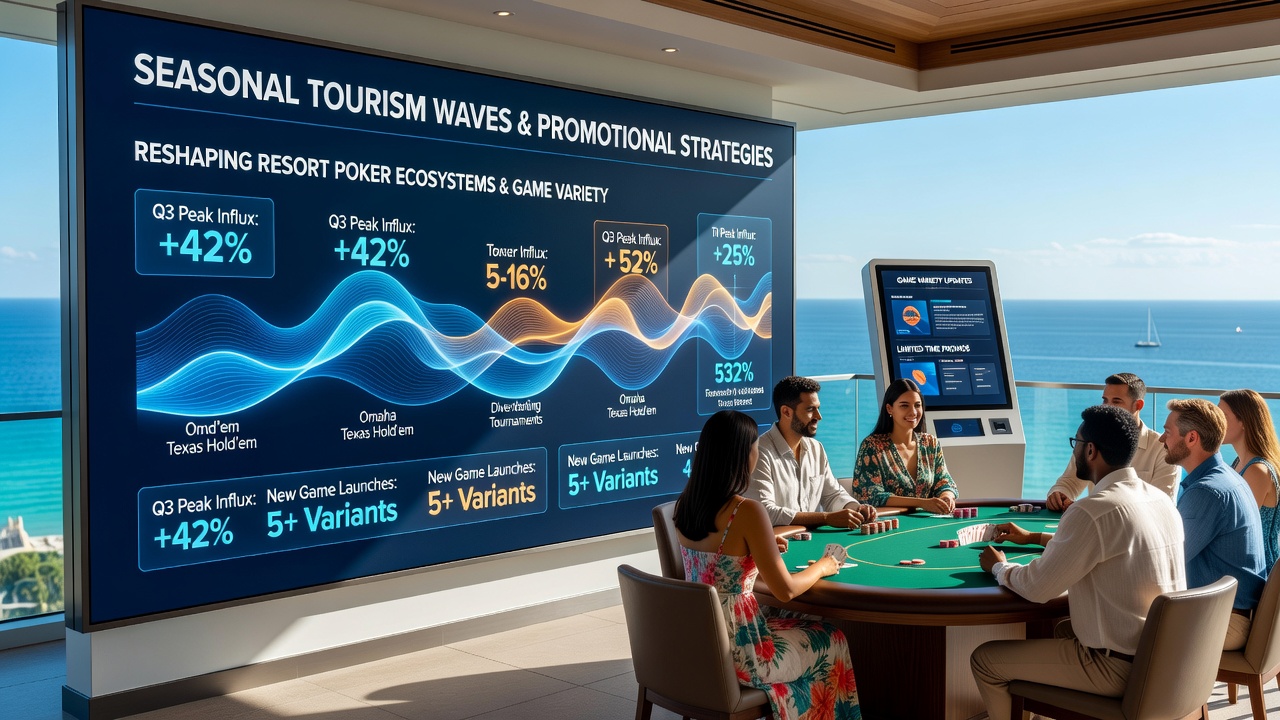
Game menus change noticeably between seasons. Summer months often see the addition of beginner-friendly cash games and mixed-game rotations that appeal to leisure travelers experimenting with poker for the first time. In contrast, winter schedules at several major resorts emphasize higher-stakes tables and heads-up challenges that attract serious players traveling for dedicated poker trips. These shifts are not arbitrary; they follow booking data supplied by affiliated hotels and airlines.
Operators also monitor regulatory filings across borders to anticipate cross-market trends. For instance, adjustments observed in Singapore and Macau resort properties during monsoon-affected months have prompted some U.S. venues to test similar temporary game rotations. Australian gaming statistics from state oversight bodies further illustrate how tourism dips correlate wth reduced spread of less common variants until visitor numbers rebound.
Technology and Staffing Considerations
Digital reservation systems now integrate tourism forecasts so that table assignments and dealer shifts scale automatically with projected demand. This reduces idle tables during quiet weeks and prevents overcrowding during surges. Properties that adopted these tools earlier report fewer complaints about wait times and better retention of recreational players who value predictable experiences.
Staff training programs likewise follow seasonal calendars. Dealers receive cross-training on new variants introduced for tourist periods, while floor supervisors learn to manage larger fields during festival-style events. Such preparation minimizes errors and keeps games moving at the pace visitors expect.
Conclusion
Seasonal tourism continues to dictate both promotional calendars and the breadth of games available in resort poker settings. Properties that align offerings with documented visitor patterns maintain stronger occupancy of tables across the full year. Ongoing collection of arrival statistics and revenue figures will determine how these adaptations evolve beyond 2026.