Resorts World NYC Navigates Regulatory Dispute Over Horseracing Support Obligations
Zara Keller · Jun 2, 2026

Resorts World NYC Navigates Regulatory Dispute Over Horseracing Support Obligations
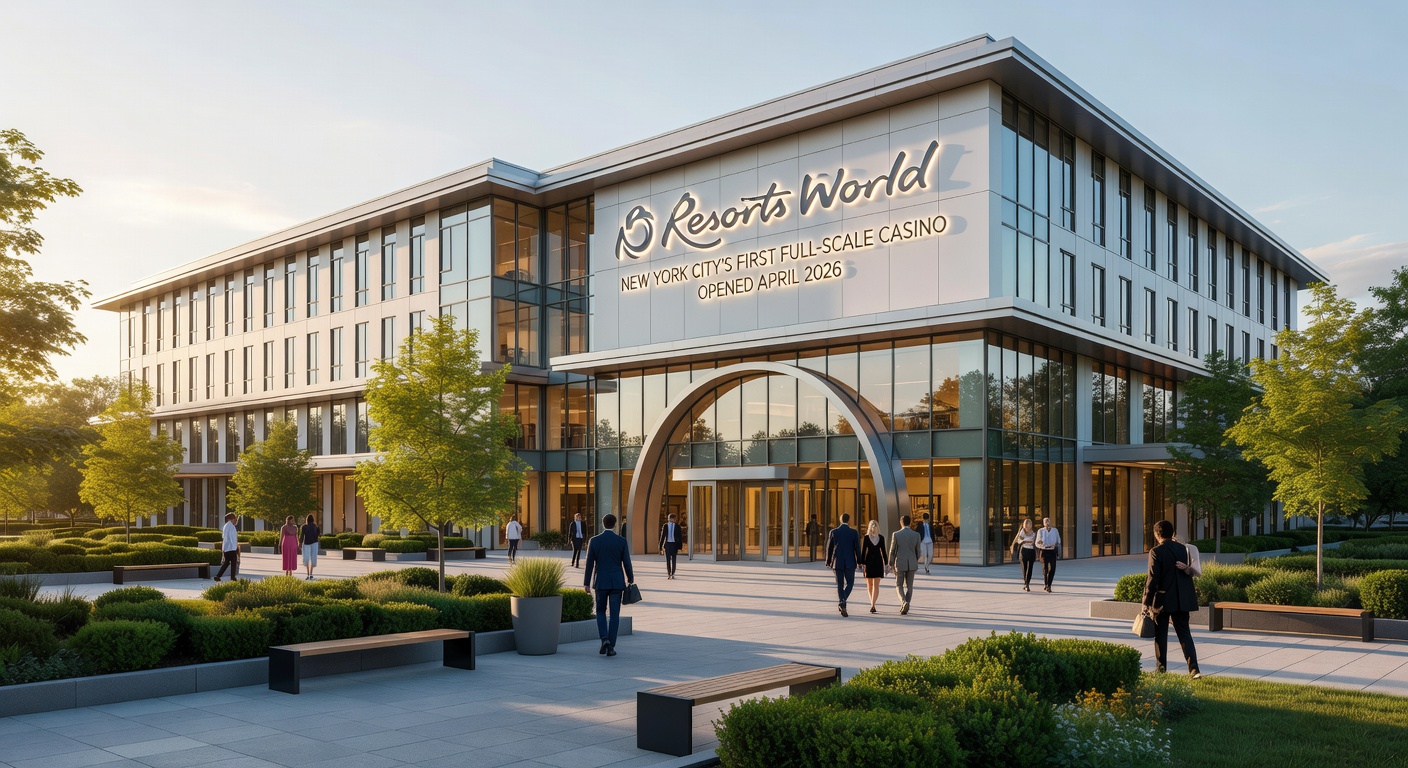
Resorts World, the operator behind New York City’s first full-scale casino that opened its doors in April 2026 at the Aqueduct Racetrack site in Queens, finds itself in an ongoing disagreement with the New York State Gaming Commission regarding annual “racing support” payments directed toward the state’s horseracing industry, and those payments carry projections of at least $150 million each year with the potential to surpass $500 million across a four-year span. The company maintains that its winning bid included a 56% tax rate which already accounts for these contributions, whereas commission officials hold that the amounts require separate remittance beyond the tax structure itself.
Observers note the timing of this disagreement coincides with early operational phases at the Queens venue, where the facility has begun generating revenue under the commercial gaming framework established by state authorities. Resorts World has advanced a legislative proposal aimed at channeling the required payments straight from the commercial gaming revenue fund, a move that would sidestep the need for direct additional outlays from the operator while still fulfilling support commitments to horseracing stakeholders.
Background on the Casino’s Establishment and Tax Bid
The Aqueduct Racetrack location secured approval for full-scale casino operations after Resorts World submitted a bid that featured the 56% tax rate, one of the higher figures among competing proposals, and that rate was intended to encompass various obligations tied to the state’s gaming and racing sectors. Data from the New York State Gaming Commission’s oversight of commercial casinos shows how tax allocations typically flow into dedicated funds that support both regulatory functions and industry-adjacent programs, including those benefiting equine sports. The current impasse centers on whether the racing support component sits inside or outside that 56% envelope, creating uncertainty around cash-flow planning for the operator during its first full year of table games and slot activity.
Resorts World has argued that its bid calculations incorporated the projected racing support figures, meaning any requirement for separate payments would alter the economic model presented during the licensing process. Commission representatives counter that precedent and statutory language treat these contributions as distinct line items that commercial casino licensees must meet independently of their core tax remittances.
Details of the Proposed Legislative Fix
Under the legislation Resorts World has put forward, the racing support payments would draw directly from the commercial gaming revenue fund rather than requiring the casino to issue separate checks each quarter. This approach would preserve the integrity of the 56% tax bid while ensuring consistent funding reaches the horseracing sector, and it aligns with existing mechanisms that already pool gaming receipts for distribution across multiple state priorities. Those who have followed similar funding arrangements in other jurisdictions point out that revenue-fund mechanisms often reduce administrative friction for operators while maintaining transparency for regulators and legislators.
State records indicate the commercial gaming revenue fund already serves as the collection point for tax receipts from facilities like the one at Aqueduct, so routing the racing support amounts through the same pool would require only a statutory adjustment rather than new collection infrastructure. The proposal remains under review as of June 2026, with lawmakers expected to examine how the change would affect both the horseracing industry’s annual allocations and the overall distribution percentages that reach other state programs.
Financial Projections and Industry Context
Annual racing support obligations estimated at $150 million or higher translate into substantial quarterly transfers once the casino reaches stabilized revenue levels, and the four-year cumulative figure exceeding $500 million underscores the scale of the commitment under discussion. Because the 56% tax rate was a central element of Resorts World’s successful bid, any clarification on whether the racing support sits inside that rate carries direct implications for the operator’s net returns and for future bidding processes involving additional casino licenses elsewhere in the state. The New York State Gaming Commission’s commercial casinos page outlines current tax rates and fund allocation formulas that govern these arrangements, providing the baseline against which both sides are measuring their positions.
Resorts World has continued normal operations at the Aqueduct site while the dispute proceeds, generating revenue from table games, slots, and ancillary amenities that opened to the public in spring 2026. The company’s legislative outreach represents an attempt to secure statutory clarity before the first major payment deadlines arrive, thereby avoiding potential penalties or enforcement actions that could arise from differing interpretations of the original bid terms.
Conclusion
The disagreement between Resorts World and the New York State Gaming Commission over racing support payments illustrates how bid commitments, statutory language, and fund mechanics intersect in the state’s expanding commercial casino landscape. As the legislative proposal moves through review channels in June 2026, stakeholders across the gaming and horseracing sectors await a resolution that would define payment pathways for this and potentially future licensees operating under similar tax-rate structures. The outcome will shape cash-flow expectations for the Queens facility and set precedent for how racing support obligations integrate with the broader commercial gaming revenue system.