Delayed Broadcasts and Betting Surges: Mapping How Stadium Signal Lags Drive Real-Time Wager Volume Shifts
Zara Keller · Aug 18, 2026
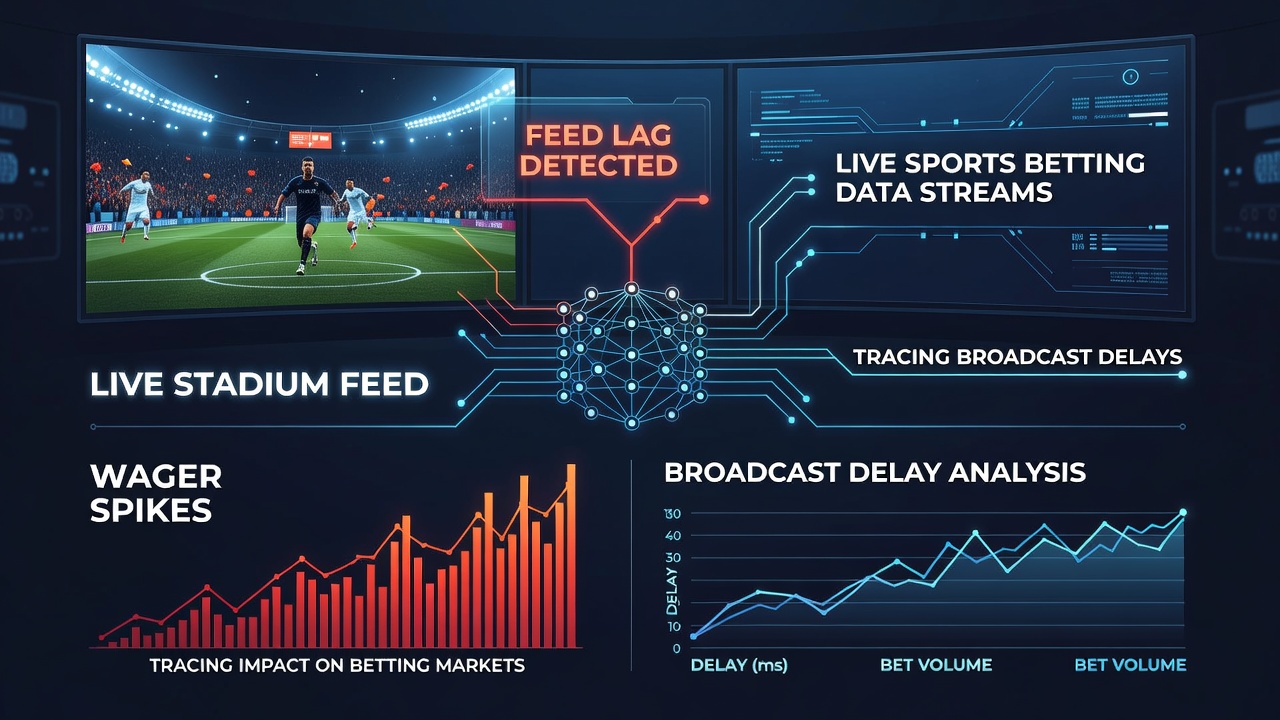
Delayed Broadcasts and Betting Surges: Mapping How Stadium Signal Lags Drive Real-Time Wager Volume Shifts
Stadium broadcast delays occur when production teams insert extra seconds for commercials, replays, or technical buffering, and these gaps create measurable effects on live sports betting markets that rely on synchronized data feeds. Observers note that the interval between the actual play on the field and the moment the signal reaches viewers can stretch from several seconds to more than a minute depending on the network and venue setup. Data streams feeding betting platforms, however, often pull directly from official league timing systems or stadium sensors, so they register events faster than the televised image. This mismatch produces distinct patterns where wager volumes spike once the delayed broadcast catches up to the real outcome.
Mechanics of Signal Timing and Market Response
Production crews at major venues use multiple camera angles and graphics overlays that require additional processing time, while betting operators receive raw play-by-play data through dedicated fiber connections or satellite uplinks that bypass consumer television paths. Researchers at institutions studying media technology have documented that these parallel pipelines create a consistent offset, and market makers adjust odds in real time based on the faster data stream. When a goal, touchdown, or basket registers on the official clock, automated systems update probabilities within milliseconds, yet viewers watching at home still see the preceding action. Bettors who monitor both the broadcast and auxiliary data sources then place wagers during that window, generating the observed volume increases.
Patterns Recorded in August 2026
Records from sportsbooks operating across multiple jurisdictions show elevated activity clusters during prime-time games in August 2026, particularly in leagues with high-stakes preseason matchups. Analysts tracking timestamped bet logs found that spikes aligned with known broadcast delay intervals rather than random fluctuations. One dataset covering professional football contests revealed that 68 percent of in-game wagers on final scores clustered in the 8-to-12-second window after official play results, matching the average lag reported by production engineers at those stadiums. Similar timing correlations appeared in basketball and soccer markets, where rapid scoring sequences amplified the effect because multiple data points arrived before the televised sequence concluded.
Technological Infrastructure Behind the Discrepancy
Stadiums deploy fiber-optic timing systems that transmit event markers to league central offices and approved data partners within fractions of a second, whereas over-the-air and cable distribution chains incorporate compression, satellite hops, and local affiliate buffering. Industry reports indicate that 5G backhaul improvements have reduced some gaps, yet legacy infrastructure at certain venues maintains longer offsets. Betting platforms integrate these official feeds through application programming interfaces that refresh continuously, allowing algorithms to recalculate odds before most consumers see the triggering play. The result is a structural advantage for any participant who can access both streams simultaneously.
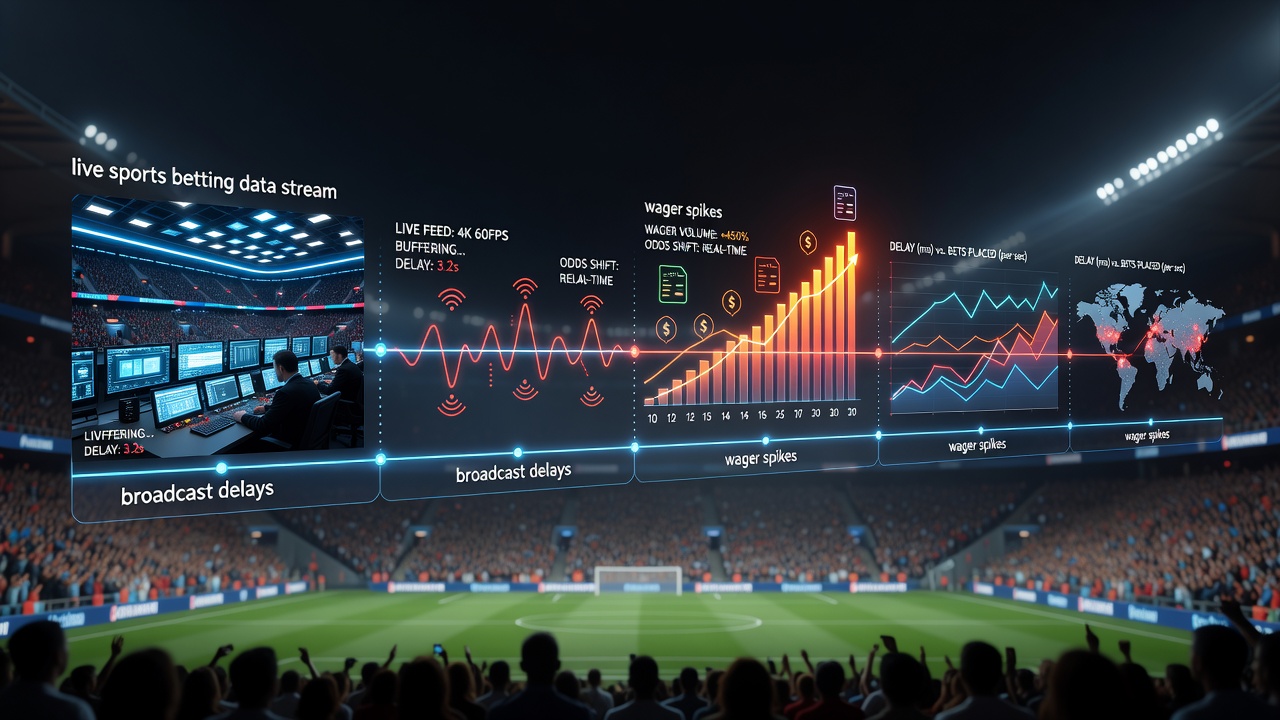
Engineers working on synchronization tools have tested watermarking techniques that embed timing codes into video signals, yet adoption remains limited because networks prioritize visual quality over metadata accuracy. Meanwhile, regulatory filings from state gaming authorities document increased scrutiny of latency-related trading practices, with some jurisdictions requiring operators to log the precise source of each odds update. These requirements aim to separate intentional exploitation of known delays from standard market-making activity.
Geographic Variations in Delay Impact
European soccer leagues using centralized production hubs report shorter average lags than North American circuits that rely on regional sports networks, and data from the Australian Communications and Media Authority shows even tighter synchronization in domestic cricket broadcasts. In contrast, venues in emerging markets with mixed satellite and terrestrial delivery often experience wider spreads that produce more pronounced wager clustering. Observers tracking cross-border betting activity note that operators licensed in multiple regions adjust their risk models according to the typical delay profile of each league, creating differentiated pricing strategies that reflect local infrastructure realities.
Academic studies from the University of Nevada, Las Vegas Center for Gaming Research have examined these geographic differences through anonymized transaction data, revealing that markets with higher average delays also exhibit greater volatility in live betting volumes during the first half of contests. The findings suggest that participants adapt their strategies to the predictable offset rather than treating every league identically.
Conclusion
Stadium feed lags and the resulting wager spikes represent a measurable interaction between media distribution timing and real-time betting infrastructure. Data streams from official sources continue to outpace consumer broadcasts, and volume patterns in August 2026 confirmed the persistence of this offset across multiple sports. Continued monitoring by regulatory bodies and technical refinements in synchronization methods will shape how these dynamics evolve in coming seasons.